
 ️
️ ️
️ ️️️️️️️️️️️️️️️️️️️️️️️️️️️️️️️️️️
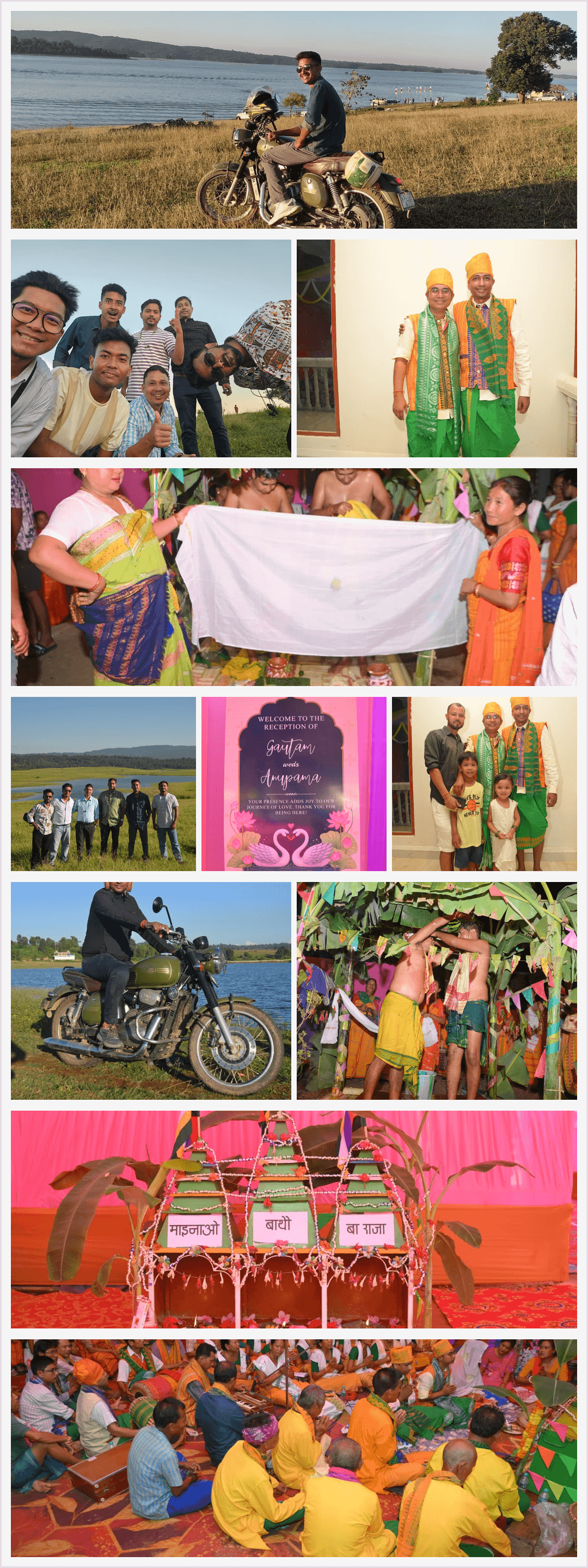
I’m back from the misty hills of Assam with a heart full of stories that feel etched into my bones. If you’ve ever chased a friend’s wedding across winding roads—and stumbled into a cultural tapestry that rewires your ideas of love, community, and even the quiet magic of a good bike ride—buckle up. This one’s for you.
My friend Gautam was tying the knot in true Karbi style. The twist? I got groom’s‑view seats to not one, but two traditional weddings—Karbi and Bodo—as the couple honored both of their tribes’ rituals. It felt like the universe had enrolled me in a crash course on living traditions, and I was there for every vibrant, earthy detail.
I was asked to become the groom’s “hoki” (Sakhi). To do so, we went through rituals and took oaths before the earth, sun, water, and the community—promising to care for each other in hard times. It felt like we’d sanctified our friendship. I was handed an umbrella to shield the groom from rice grains as we entered the bride’s home. I laughed it off—until we arrived. Outside, 40–50 young men were cracking jokes, and the air hummed with the kind of mischief that belongs to weddings. The elders stepped in, negotiated, and we made our entry. I held the umbrella like Captain America’s shield, grains pinging off the fabric as we threaded through the crowd to protect our eyes. One woman still managed to sneak her hand from below and shower us with rice. In minutes, the joyous ambush was over, but it left a grin I couldn’t shake.
The Karbi wedding, Adam Asar, began with elders leaning in to whisper words that felt like charms against the evil eye. No Karbi celebration starts without rice beer; we exchanged bongkrok and shared food that tasted like it had stories of its own. The next day, the Bodo ceremony—Batho Juri—took place. The Bodo follow Bathouism; “Ba‑thou” comes from the Bodo words ba (five) and thou (deep philosophical thought). The five principles of creation are Bar (air), Ha (earth), Dwi (water), Or (fire), and Okhrang (sky/ether). A ritual space with three deities was prepared: in the center, Bathou, the supreme god; Mainao, goddess of wealth and crops; and Ba Raja, a prominent household god. I loved how the sacred sat so comfortably in the everyday.
Because there were two weddings, Gautam and I received haldi and oil baths from relatives on two days. We sat on a floor made from banana trunks while the women sang wedding songs—voices warm and steady, the kind that settle you. The first day felt puzzling; by the second, we knew the drill. We were washed, our faces covered, and guided to our rooms. A relative carried each of us on his back. I felt terrible for the one who lifted me—I’ve gained some solid weight lately—and we all laughed. Our paternal uncles and aunts dressed us. The weddings flowed into the reception like a river that knew its banks.
A thread ran through everything: sustainability. Banana plants and biodegradable materials were everywhere—nothing wasted, everything repurposed. To an outsider it might read like a carefully funded research project from a top university or an EU guideline. Here, it’s simply how things are done—and have been, for generations.
We slipped away to Umrangso the next day. I hopped on a bike with the cousin Monu, an expert rider. I can handle a bike, but I’m not exactly hands‑on. We reached around 3:30, the sun easing off, a soft gold settling over the meadows. The wind smelled green and a little sweet. We waited for the sunset, took a ton of photos, and promised ourselves a camping trip next time. On the way back, a few road issues reminded us of the importance of proper biking gear. Still, the ride was splendid. I reached home yesterday and, fortunately, missed the Diwali and Chhath Puja rush. Until May this year I’d been practicing neti neti—peeling away what isn’t essential. Wu‑Wei is working for me so far.
I didn’t get much one-on-one time with Gautam, but I met a cast of unforgettable people. A dancer who loves nothing but dance—he made me forget the world and just move. A tabla-and-flute musician by day and a master rice-beer brewer by night. Monu, the biker who pulled off that 2 km ride, is as trustworthy as they come—best wishes to him. My paternal uncle (Khura), whose name I’ve embarrassingly forgotten, is a born improviser who can finish any task with whatever’s at hand. Gautam’s brother-in-law is an open-hearted host who shares his stories and gets what we’re going through. I also reconnected with friends from my last trip—Gautam’s circle and his brother Digbijoy’s crew. And Digbijoy, a Fine Arts graduate, is pure fun to be around—the chill guy everyone wants nearby.
For five months I was deep into learning and building in AI. I’m glad I stepped away from the FOMO to be with real people again—to feel the full spectrum of being human and humane. Assam felt inclusive and hospitable; its people are passionate. Every day there, someone was talking about the loss of Zubeen Da. Assam will keep creating musical legends, and his loss is irreplaceable. Moments like these make me think about how we hold our artists—how demand, adoration, and pressure sometimes blur into one. If there’s truth to be found in any controversy, I hope it’s found with care and justice. More than anything, I hope we resist the culture of greed that forgets the human being at the center.
Now I’m back at base, easing into AI again. Moving places always hurts; I miss people, and sometimes I avoid trips just to dodge that ache. Maybe the best thing is to talk about it. Everyone feels this pull. I’m so damn glad I made it to that wedding. It wasn’t just a celebration; it was a recalibration.
“Every time my surroundings change, I feel enormous sadness. It’s not greater when I leave a place tied to memories, grief, or happiness. It’s the change itself that unsettles me, just as liquid in a jar turns cloudy when you shake it.” —Italo Svevo
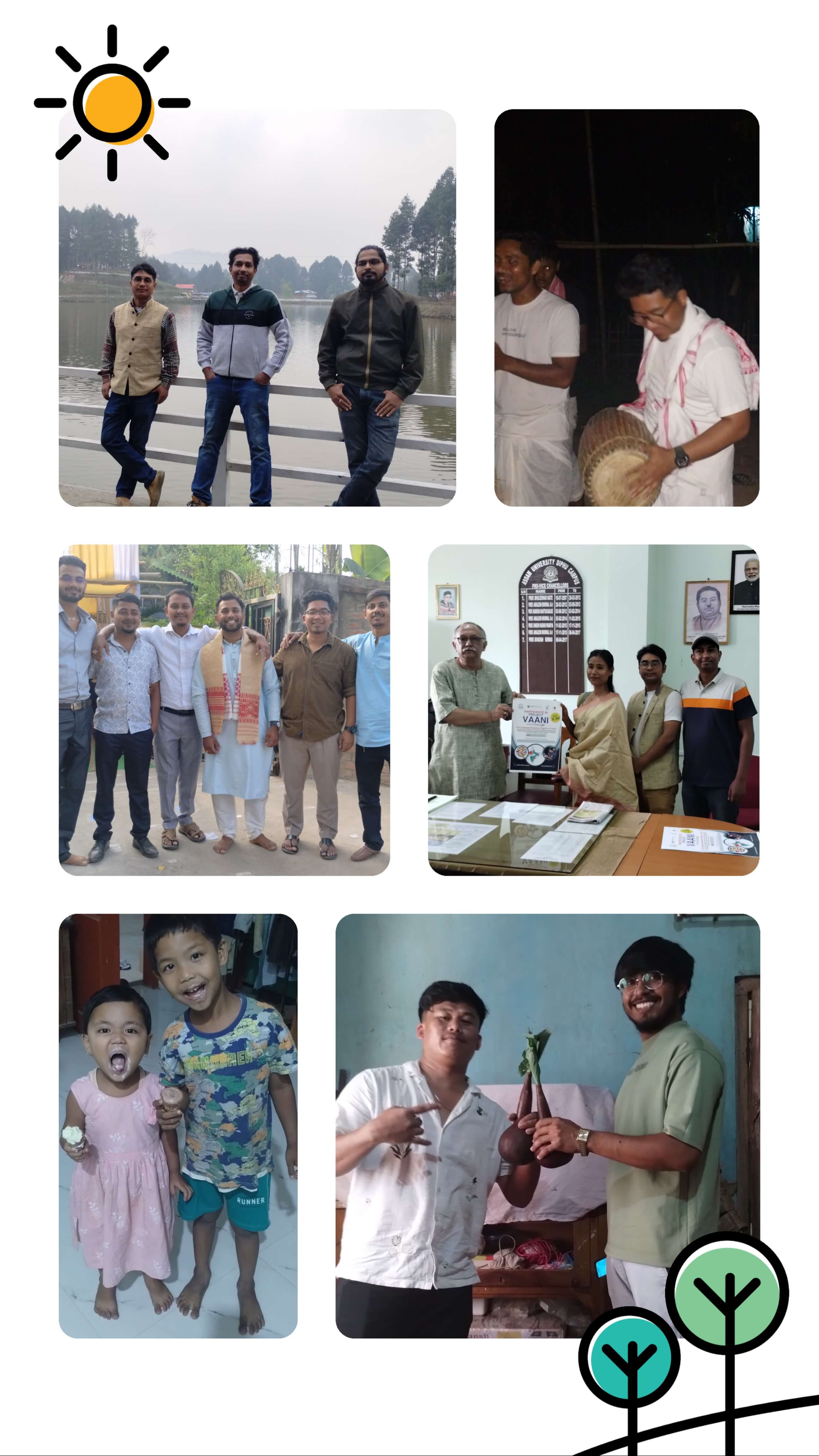
The call came from Gautam, friend and founder of Patkai Himalaya Foundation. “Pack your bags, we’re travelling in North-East India for a month,” he said. It was for an assignment with IISc(Project Vaani)—we needed to gather speech samples from 18 districts across the region. Without hesitation, I said, “Hell, yeah!” The project felt like National Geographic meets tech startup, promising adventure and purpose in equal measure.
Post-Holi, I found myself in Karbi Anglong, ready to embark on what would become a transformative journey. Over the next 50 days, we covered 4000+ kilometers across two countries, eight districts, and three states, fueled by countless cups of chai.
I was returning to the North-East after 12 years, carrying a mix of curiosity, thrill, and nervousness. It felt like meeting an old friend who’d had a complete glow-up. The roads were smoother, the internet faster, yet the warmth of the people remained unchanged, creating an immediate sense of familiarity.
Interestingly, despite my post-pandemic social anxiety, I never felt it during this trip. Perhaps it was because I was constantly engaging with people—from remote villagers to enthusiastic college students—becoming something of an extroverted AI evangelist in the process.
The food was undoubtedly the highlight of the journey. I savored exotic dishes whose names I couldn’t pronounce, discovered drinks that challenged my palate, and experienced flavors that made my tongue dance with joy. During various cultural events, I met incredibly creative individuals—singers, painters, and poets who opened my eyes to the region’s rich artistic heritage.
Celebrating Rongali Bihu was particularly special. It reinforced something I’d begun to notice: North-East India doesn’t just live sustainably—it celebrates sustainability. Whether it’s food, festivals, or daily life, everything is rooted in harmony with nature. This philosophy taught me profound life lessons and gave me a newfound appreciation for the region.
Those 50 days served as a reality check. I observed how people in the North-East live simply, celebrate often, and respect deeply. They don’t just find joy—they actively create it. This approach stands in stark contrast to our often linear, goal-obsessed urban lives.
The experience reminded me of Mick Jagger’s words: “You can’t always get what you want, but if you try sometimes, you might find you get what you need.” I discovered exactly what I needed during this journey—perspective, connection, and a deeper understanding of what it means to truly live.
By the end of the trip, I had gained a second home in Karbi Anglong, a heart full of gratitude, and a head full of stories. These weren’t just travel anecdotes, but stories about people, AI, and the magic that happens when you step outside your comfort zone.
This adventure deserves more than just one blog post. It’s a testament to long breaks, long roads, and the kind of experiences that remind you to live a little—or, in my case, a lot.
Stay tuned for more stories from this incredible journey.
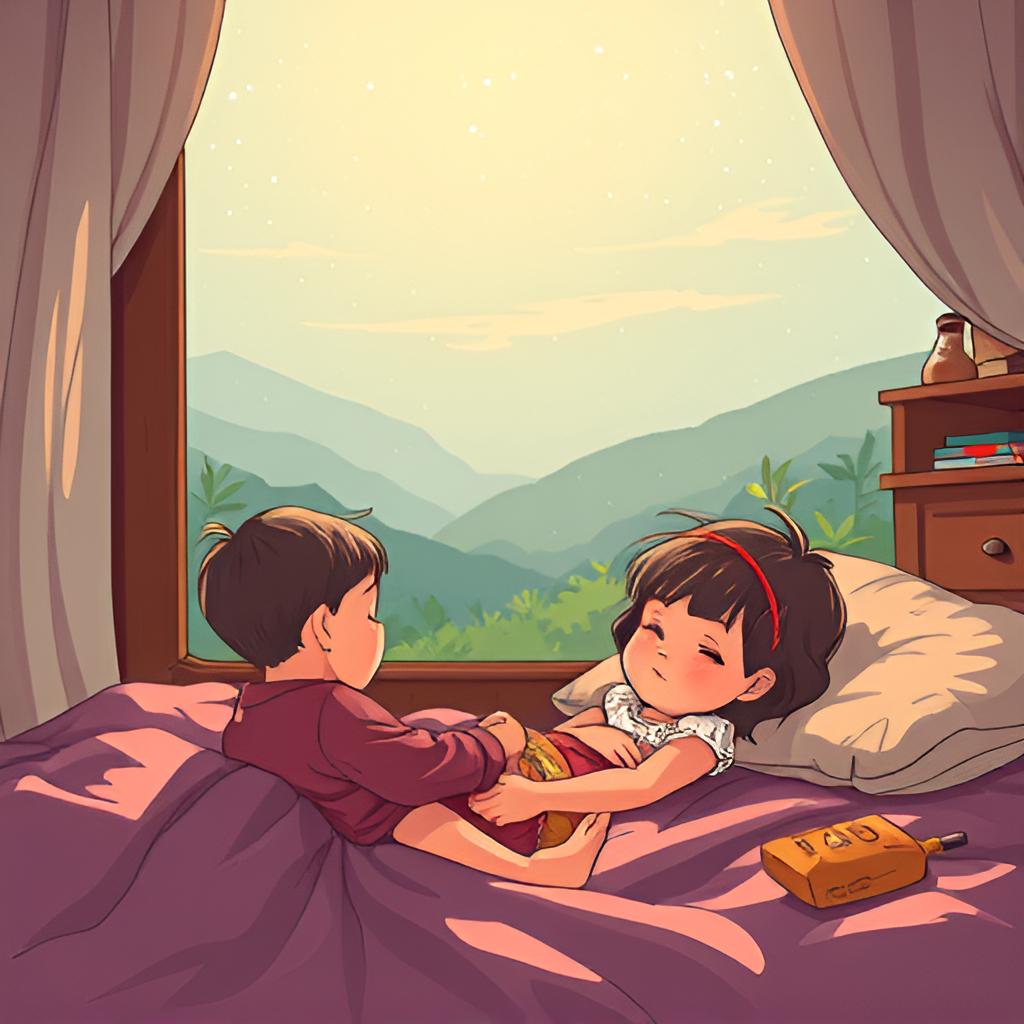
The best dreams are always about childhood, home and young parents.

The AI is out here living the dream—doing all the creative stuff like painting, singing, dancing, writing poetry, telling stories, and even coding. Meanwhile, humans are stuck with the glamorous life of laundry, dishes, and taking out the trash. Who knew the future would be like this